With record visitor numbers and some of the finest beaches in the Caribbean, the DR is having quite the moment. Here’s how to make the most of yours.
There’s one thing you need to sort before you even think about what to pack. Anyone travelling to the Dominican Republic must complete a DR eTicket – a mandatory digital entry form that’s replaced the old paper immigration and customs cards. It doesn’t matter where you’re from or how long you’re going for: every single traveller needs one, children included. Your airline will check for the QR code before boarding, and without it you won’t be getting on that plane. It’s one of those things that’s very easy to sort and very easy to forget, so do it now.
The form takes about ten minutes to fill in and is usually processed within a few hours. It’s recommend you apply at least 72 hours before you fly, just to give yourself some breathing room. If you’re booking a return trip, you’ll need a separate QR code for your departure too, but the good news is you can apply for both at the same time, which saves a lot of faff later on.
Right. Admin sorted. Now let’s get to the good stuff.
Why Is the Dominican Republic so popular?
The DR welcomed a record-breaking 11.6 million visitors in 2025, making it the most visited destination in the entire Caribbean. And it’s easy to see why. The country has it all: world-class beaches, a capital city packed with five centuries of history, extraordinary wildlife, and food that genuinely deserves more attention than it gets.
But here’s the thing, a large chunk of those 11.6 million people flew into Punta Cana, checked into an all-inclusive resort, and barely left the pool. Which means the rest of the country is remarkably uncrowded for somewhere this popular.
Expedia’s Unpack ’25 travel report – based on surveys from 25,000 travellers across 19 countries found that 63 per cent of people planned to visit a ‘detour destination’ on their next trip: somewhere near a popular hub but far enough off the beaten track to feel like a proper discovery. There are plenty of places like this in the Dominican Republic.
Where Should You Base Yourself?
Punta Cana
This is where most international flights land, and the beaches really are excellent. The stretch at Bávaro is picture-perfect: calm, warm, and lined with palms. If it’s your first time in the Caribbean and you’re after a proper sun-and-sand holiday with minimal hassle, you honestly can’t go wrong here.
That said, if you’re the sort of traveller who gets restless after a couple of days by the pool, it’s definitely worth factoring in a few nights elsewhere.
Las Terrenas
This is a completely different vibe. Las Terrenas is a small, relaxed beach town on the Samaná Peninsula, popular with French and Italian expats, with excellent seafood restaurants on the waterfront and a much more local feel than the Punta Cana resort strip. It makes a brilliant base for exploring the rest of the peninsula, and it’s where you’ll want to be if whale season is on your list (more on that below).
Santo Domingo
The capital sits about two hours west of Punta Cana on the southern coast. Most first-timers skip it entirely, which we think is a genuine mistake. But we’ll come back to that.
The Beaches That Are Worth the Extra Effort
Punta Cana’s beaches are lovely. But if you’re prepared to travel a little further, the Dominican Republic has some truly spectacular coastline that most tourists never reach.
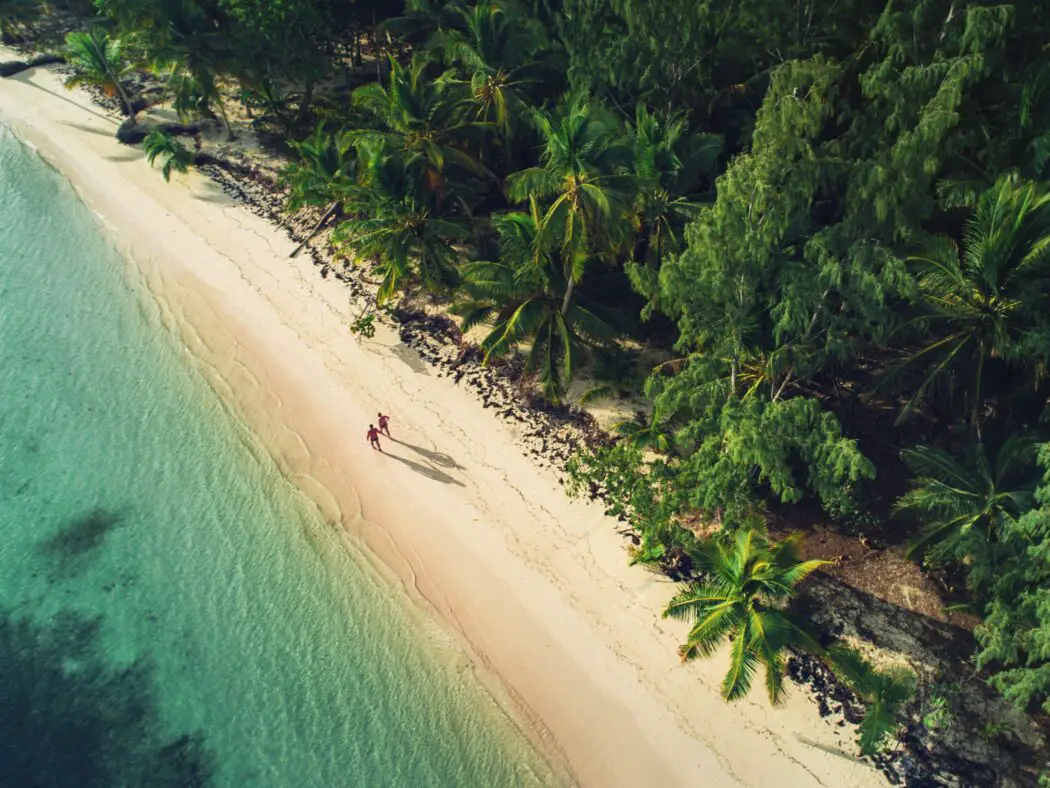
Playa Rincón, at the eastern tip of the Samaná Peninsula, consistently features on lists of the best beaches in the Caribbean. Getting there involves a 45-minute boat ride from Las Galeras, and when you arrive you’ll find three kilometres of white sand backed by palms and jungle hills, with no resort furniture in sight. A handful of open-air kitchens at the far end serve grilled fish for a few dollars. Walk east and the beach empties out entirely.
Bahía de las Águilas, down in the far south-west, is arguably the most remote beach in the country. You reach it either by boat or by 4×4 through Jaragua National Park. The water is that particular shade of blue-green that makes you suspect your sunglasses are doing something odd, but they’re not. Eight kilometres of completely undeveloped shoreline, and absolutely worth the effort of getting there.
Neither beach requires a major expedition, but you will need to plan ahead and set aside a half-day for each.
Don’t Skip Santo Domingo
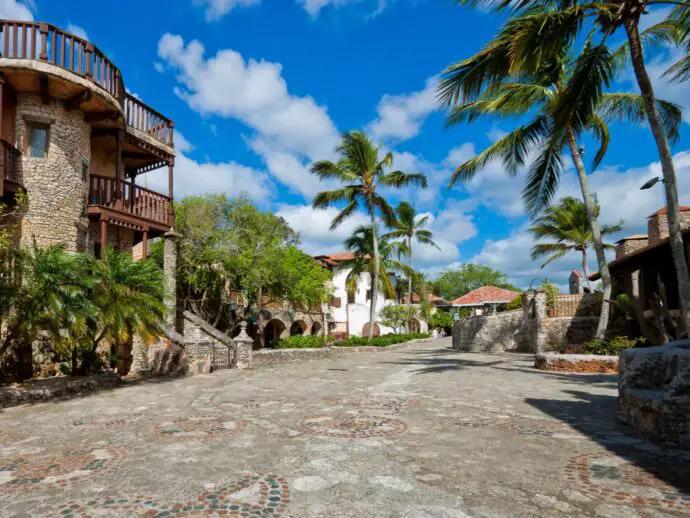
The Zona Colonial, the historic heart of the Dominican capital, is a UNESCO World Heritage Site and the oldest continuously inhabited European settlement in the Americas. Christopher Columbus used this island as the launch pad for the entire New World. The first cathedral built in the Americas (completed in 1535 and still standing) is here. So is the first fortified palace in the New World.
Walk the cobblestone streets on a quiet weekday morning and it’s genuinely beautiful. The restaurant scene has taken off in recent years, with chefs doing impressive things with local ingredients – plantain, yuca, fresh seafood – in buildings that are five or six centuries old. The Billini Hotel, set inside a former colonial convent, is the best place to stay in the neighbourhood. Even if you’re not staying there, the rooftop bar is worth an evening.
And on Sunday nights, a group called Bonyé plays live merengue and salsa in the open-air ruins of the Monastery of San Francisco – the first monastery of the New World from 6pm to 10pm. It’s free. It’s one of the best things you can do in the Caribbean, and it costs you absolutely nothing.
What to Eat (Away From the Resort)
Dominican food is really good, but sadly, many visitors never bother to try it if they don’t leave their resorts. The national dish is La Bandera, which is rice, red beans, and braised meat, named for the colours of the flag. You’ll find it at a comedor, which is essentially a family kitchen serving the same lunch every day. Most charge under three dollars and it’s better than anything you’ll find at a resort buffet.
Mangú is the breakfast staple: mashed green plantains with fried salami, eggs, and pickled red onions. Adrian Tropical on the waterfront Malecón in Santo Domingo is a great place to try it, and you can eat breakfast looking out at the Caribbean Sea for about five dollars.
And wherever you end up, order a cold Presidente at a beach bar. It’s the local lager, and it tastes considerably better with your feet in the sand.
When to Go – and Why January Makes Such a Compelling Case
The dry season runs from December through to April, which is when the weather is most reliable and the resorts are at their liveliest. If you’re after lower prices and fewer crowds, the shoulder seasons – May to June and November – are well worth considering.
But if you’re looking for one reason to go in January specifically, it’s this: the humpback whales. Every winter, between January and March, the entire North Atlantic humpback population gathers in the Bay of Samaná to breed and calve. The Dominican Republic is the only place on earth where this happens at this scale. Whale-watching trips leave from Samaná town daily throughout the season. Watching a 40-tonne animal breach at close range is, genuinely, not something you forget in a hurry.
It’s also worth knowing that Caribbean travel demand is growing fast right now. Data cited by Caribbean Journal, based on KAYAK search figures, shows that Caribbean travel interest for summer 2026 is already up 15 per cent year on year, with travellers locking in accommodation considerably earlier than usual. If whale season is on your wish list, sorting your base in Las Terrenas or Las Galeras sooner rather than later is genuinely sensible advice.
The Practical Bits: What to Sort Before You Fly
- DR eTicket – mandatory for every traveller, every age, no exceptions. Apply at least 72 hours before departure. If you’re on a return trip, you need entry and exit codes – apply for both at once.
- Travel insurance – The US State Department rates the DR as Level 2 (‘exercise increased caution’), which is fairly standard for popular destinations. Tourist areas are well-patrolled, but having cover for medical emergencies and trip disruption is always sensible.
- Cash (Dominican pesos) – US dollars are widely accepted in resort zones, but you’ll need local currency for comedores, markets, and anywhere off the main tourist trail.
- Getting around – Rental cars are the most flexible option if you want to explore beyond Punta Cana. Uber works in Santo Domingo. Guáguas (shared minibuses) connect most towns cheaply, but they run on their own timetable.
- Booking ahead for Samaná – Whale season fills up quickly. If you want to be in Las Terrenas or Las Galeras in January or February, don’t leave it too late.
The Dominican Republic is one of those destinations that gives back in direct proportion to how much effort you put in. You can have a perfectly lovely holiday without ever leaving the beach. Or you can watch humpback whales breach at dawn, eat a three-dollar lunch at a family kitchen, and end the evening listening to live merengue in a 500-year-old ruin. The second option is significantly better, and it really doesn’t take much to get there.