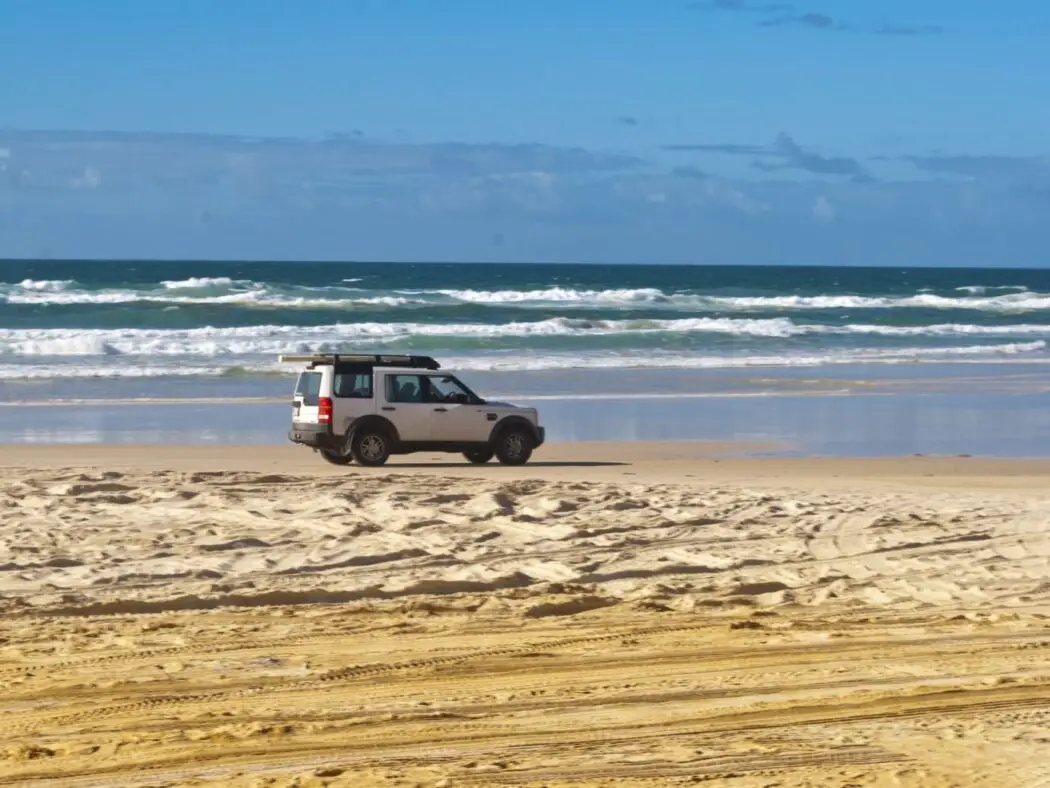
Australia is a seemingly endless country on a map, but it’s one that can be easily enjoyed from behind the steering wheel. To UK travellers, distances in Australia feel vast and never-endling, which is part of the appeal. Mountain terrain changes radically in a short drive of one day, and the feeling of space adjusts the expectations quietly. Coastal roads follow wild oceans, desert roads melt into the distance, and rainforest roads wind through the old greenery that has formed over several thousand years.
To UK-based travellers, road trips provide the most intimate experience of the contrasts in Australia. In fact, many travellers will look up the entry arrangements, such as the visa for Australia for UK citizens, before arranging routes and hiring cars, but upon starting the engine, plans are relaxed, and land takes control. Every trip is less about crossing the destinations off a list and more about perceiving the variations in the light, colour, and landscape.
Below are the 10 highlighted Australian road trips that continuously leave travellers in awe, not due to speed, but the wonders they reveal in every single mile.
Great Ocean Road (Victoria)
The Great Ocean Road is one of the coastal drives that are most iconic in Australia, and which run along the high cliffs and the crashing waves of the Southern Ocean. The road covers an area of approximately 243 kilometres, and it goes through surf towns, eucalyptus forests, and spectacular lookouts. The Twelve Apostles, which are some of Australia’s most iconic landmarks, appear out of the sea in the form of sculpted shapes that are the result of time.
The constant pull-outs encourage tourists to stop and follow hiking trails along the cliffs and observe the light shift across the water. The mornings are misty and still, and the afternoons are ocean-windy and active. The road favours leisurely driving and is therefore great for tourists who prefer getting the view of the road instead of hurrying up and down the road.
Pacific Coast Way (Sydney to Brisbane)
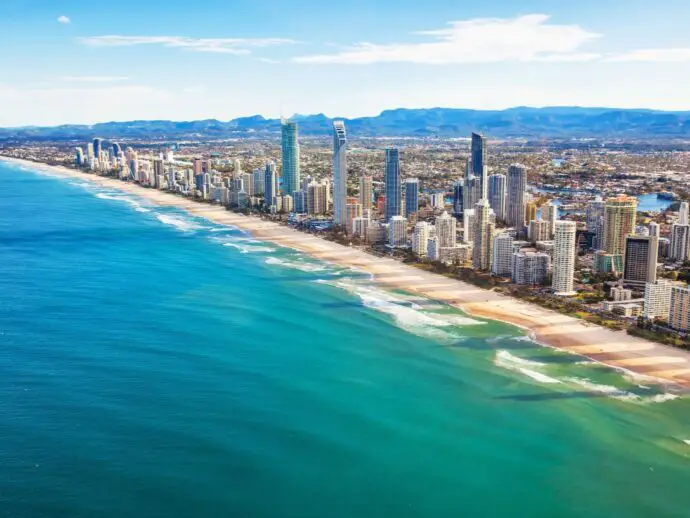
This is a coastal road that runs between Brisbane and Sydney, and it provides an alternation between stretches of highway and rewarding detours. The path traverses beach resorts, subtropical forests, and leisurely beach towns with apparently slower days.
Tourists usually visit national parks, take brief walks, take a freshwater dip, or enjoy a beachy outlook, then hop back onto the road. The diversity makes the trip interesting, and the constant presence of the ocean also maintains the continuity. It is a road that is expansive as well as familiar, particularly to those who love the idea of travelling by the coast.
Savannah Way (Queensland to Western Australia)
The Savannah Way is a road built along the coast of tropical hugging the top of the continent, linking remote inland towns. It is comprised of wetlands, savannah grassland, and historic settlements that have been altered by the change of seasons.
This is a place where the distance is very much felt by the travellers because there are long stretches of driving interspersed with small settlements and roadside stops. The sceneries are wild, and the trip illustrates the extent to which Australia is sparsely populated. It is a journey of discovery that should be flexible to travellers’ interests and not on fixed schedules.
Red Centre Way (Northern Territory)
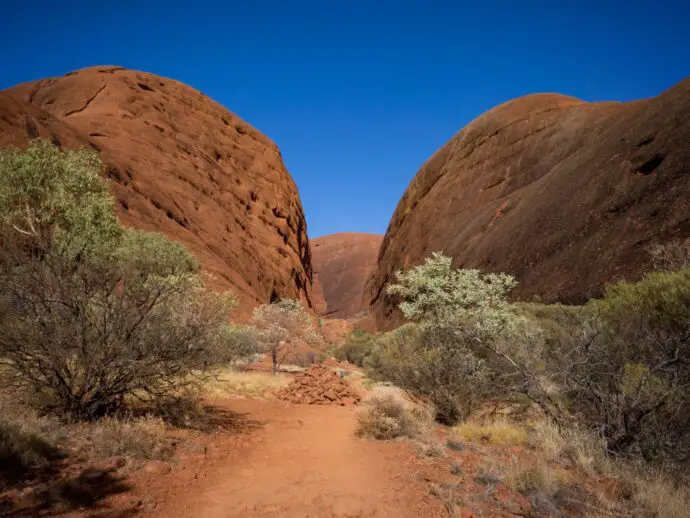
This is a circular route that goes through the upper part of Australia, which is characterized by space, silence, and colour. The Red Centre Way is surrounded by dry terrain where red soils collide with blue skies. Extend the road, and your road will encourage a different kind of pace, that is, the pace of patience and not of progress.
The sunrise and sunset radically change the landscape, colouring it with burnt orange and soft purple. The lull in the traffic and urbanity allows one time to reflect, and this journey is as emotional as it is aesthetic. It provides a glimpse of the interior of Australia that can rarely be offered by a trip within the city.
Nullarbor Plain Drive (South Australia to Western Australia)
The Nullarbor Crossing is one of the few road trips that can challenge perception. This is a famous drive that is flat, straight, and open, and spans a distance of more than 1,200 kilometres. The trees are absent, and the landmarks are common, which gives the impression of timelessness.
The southern side has sudden changes to cliffs from the edge, that has dramatic views of the Southern Ocean. While driving at night, there will be an experience of the skies of great size with stars, which enhances the size of the land. It is an experience that intervenes comfort zones but provides an isolated feeling that is hard to find.
Gibb River Road (Kimberley Region)
The Gibb River Road traverses the rocky terrain of the Kimberley region and is only accessible in the dry season. This is an adventure drive route characterized by river crossings, gravel tracks, and remote gorges.
Slow tourists are offered some freshwater swimming holes, shaded rock formations, and quiet campsites. It is necessary to prepare in advance; however, the road provides an unprecedented chance to see Australia in a pure and crude manner. It is most likely to attract those who are not after convenience but experience.
Grand Pacific Drive (New South Wales)
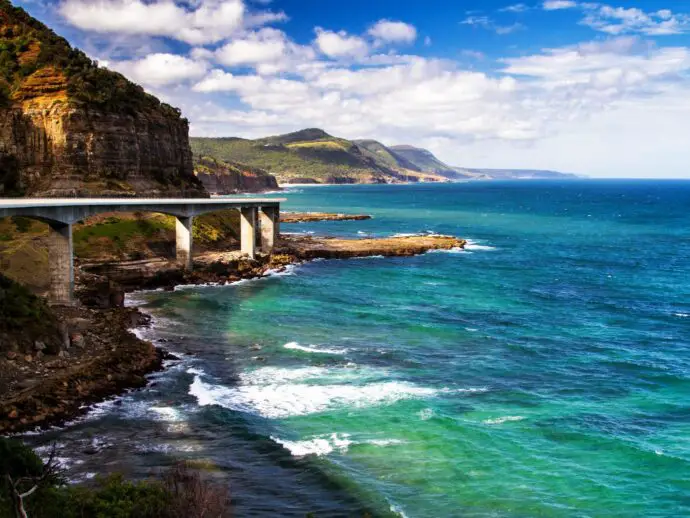
The Grand Pacific Drive provides dramatic scenery within a relatively small distance, just south of Sydney. Curves of rainforests transform into cliffside strips, which provide a continuous contrast with the eyes.
The iconic Sea Cliff Bridge provides a stunning spectacle with the road, ocean, and sky coming together. This scenery is a favourite day trip, although the stratified scenery motivates more time to be explored. It demonstrates that even the smaller paths in Australia may be cinematic.
Tasmanian East Coast Drive (Tasmania)
The east coast of Tasmania is relaxed, and the drive along the coast takes a short duration between immaculate beaches and small fishing villages. The highway follows the coastline and exposes clear water, white sand, and hilly hills.
The distances are also short, and hence the travellers can spend time at every destination. Sightseeing of wildlife is easy, especially during mornings and evenings, and roads are not as busy, hence driving is easy. It is the best route to be taken by those tourists who want to enjoy the beauty of nature but do not want to spend much time driving.
Great Alpine Road (Victoria)
Leading to the alpine areas in Australia, this drive serves as an eye-opener to many visitors to what the country has to offer. The Great Alpine Road passes through the mountain passes, valleys, and old towns.
The experience is drastically different in accordance with seasonal changes. During winter, there are snowy landscapes, and during warmer conditions, wildflowers and green hills are seen. The uphill tunnelling continues to keep the journey aesthetically active, which is attractive to tourists who are fond of different landscapes.
Coral Coast Drive (Western Australia)
The Coral Coast Drive is a road that goes through the remote West Australian coastline and bridges the deserts with the coral reefs. The red and ochre landforms are in contrast with the turquoise waters.
Marine creatures are frequently found very close to land, which contributes to an unexpectedly amazing trip. Beaches are quiet, and resorts are busy, and it is the feeling of discovery as opposed to anticipation. This is the best path to take for people who want less-crowded experiences.
Why Road Trips Matter in Australia
The road network in Australia facilitates such a type of travelling in the country on a national level. The country is highly sensitive to road travel as its citizens have more than 800,000 kilometres of roads connecting cities, regional centres, and remote communities.
Road trips also enable the traveller to escape city boundaries and explore the regions of Australia in a relaxed way, and make distance a necessary element of the trip as opposed to a burden they must cross.
What UK Travellers Discover on the Road
Australian road trips present a new relationship with space to UK travellers who are used to shorter distances and closer landscapes. As the road distances increase, so does the silence, which is where true appreciation of your surroundings begins.
Such journeys motivate awareness and patience, along with greater sensitivity to the magnitude of nature. Australia cannot be hurried; it is a country that has to be seen at a leisurely pace from the road.