Short version? Go to Dubai for real heat and a sea you’ll happily swim in. Go to Marrakech if you’d rather fly for under four hours, wander a medina and eat very well in weather that feels like a decent English June. Both are good answers to a grey British January, they’re just very different holidays.
Most British travellers won’t need to arrange visas, because UK passport holders get a visa on arrival in the UAE, and Morocco doesn’t ask for a visa at all. The catch is mixed groups. If your partner, a friend or a parent is travelling on another passport, check what the UAE needs from them sooner rather than later, and if that means a visa in advance, they can sort it before the trip through a site like govr.ae’s UAE visa service, a licensed platform that arranges UAE visit visas through official immigration channels. Right, on to the comparison.
Which is warmer in winter, Dubai or Marrakech?
Dubai is easily the warmest out of the two with afternoon temperatures hovering in the mid-twenties between December and February. January is the coolest month, and even then it’s warm, with evenings in the city centre mild enough for dinner outside without a coat.
Marrakech winter temperatures are more of a mixed bag. The days are lovely, usually around 18 to 20°C under clear blue skies, but then the sun drops behind the medina walls and the temperature goes with it. Nights often drop quite dramatically, falling to between 6 and 9°C which catches plenty of first-timers out.
Put the numbers side by side and the temperature gap is easy to see, with the seaside areas following a similar pattern. The Gulf off Dubai stays at roughly 22 to 25°C, while Morocco’s Atlantic coast a few hours from Marrakech is nearer 16 to 17°C. Rain is rare in Dubai, with February the wettest month, whereas Marrakech gets a few rainy days each month.
In practice, that changes what goes in your suitcase. For Dubai, pack summer clothes plus one light layer for the fierce air conditioning in the malls, while for Marrakech, bring a proper jumper or two for the evenings. Traditional Marrakech riads are built around open courtyards, which is charming at lunchtime and a little chilly after dark in winter.
How long does it take to get there from the UK?
Marrakech wins this one easily. A direct flight from London takes about three hours forty, so a long weekend genuinely works, and with little or no time difference there’s no jet lag to speak of. Leave after breakfast and you could be on a rooftop terrace with a glass of mint tea by mid-afternoon.
Dubai is long-haul, no getting around it. You’re looking at roughly seven hours direct from London, plus a four-hour time difference in winter, so your first day mostly disappears. What you do get is a choice of airports, with direct flights from Heathrow, Gatwick, Manchester, Birmingham, Newcastle, Glasgow and Edinburgh, among others. Honestly, Dubai makes most sense for a week or longer. Marrakech is perfectly doable with three or four nights.
Can you have a beach holiday in both?
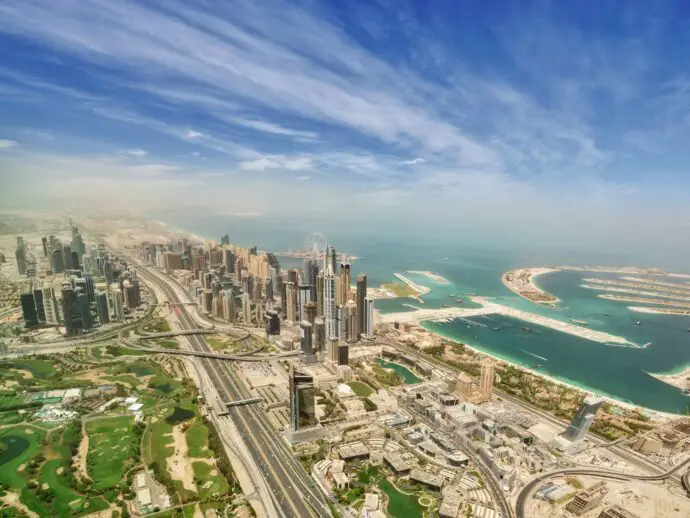
Only in Dubai, really. The beaches along Jumeirah and around the Marina face the Arabian Gulf, where the water sits at roughly 22 to 25°C through the winter. That’s cool enough to wake you up and warm enough for a proper swim, and plenty of hotels heat their pools as well.
Marrakech is inland. You’ll get your sunshine by a pool, but the nearest sea is the Atlantic, out at places like Essaouira, and in winter it’s around 16 to 17°C. Think bracing Cornish dip rather than Caribbean. So if beach time is the whole point of the trip, you’ve probably got your answer already.
Which has the better culture and atmosphere?
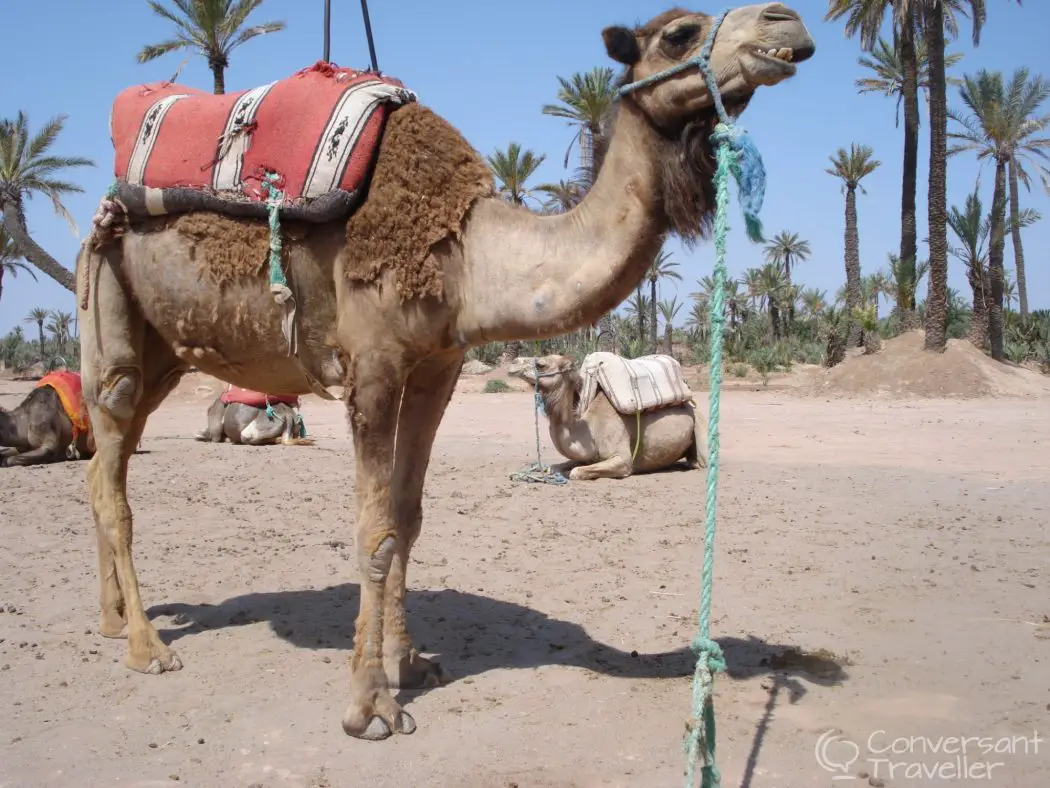
For sheer immersion, Marrakech wins this one. The medina isn’t a museum piece, it’s a working old city of narrow alleys, spice stalls and leather workshops, and every evening Djemaa el-Fnaa square turns into a noisy open-air theatre. Stay in a riad and you’re right in the thick of it. Winter suits all of this nicely, because walking the souks is far more pleasant without the summer heat, and the snow on the High Atlas makes for a striking day trip.
Dubai is more about the contrast between old and new. Spend a morning in Al Fahidi, hop on a wooden abra across the creek and poke around the gold and spice souks in Deira, and you’ll see the trading port it grew from. Then there’s the skyline, the desert and a winter calendar that’s genuinely packed, with Global Village and the Dubai Shopping Festival both running in peak season. Fun? Absolutely. Quiet? Not really.
Which is better value?
Generally speaking, Marrakech costs less than Dubai. Riads, meals and taxis are cheaper, and a short flight keeps the total down. Dubai has a reputation for being pricey, and around Christmas and New Year it certainly can be. It isn’t all gold-plated brunches, though. There are good mid-range hotels, superb cheap food in the older neighbourhoods and a Metro that gets you most places for very little. Avoid the festive fortnight and you’ll notice the difference. Prices swing a lot in both cities, mind, so check your own dates before deciding.
Which one should you choose?

Go for Dubai if you want the warm weather, a beach every day and a holiday where things simply work, which makes it a safe bet with kids. The longer flight also makes more sense if you’ve got a week or more.
Opt for Marrakech if you’ve only got a few days, care more about food and culture than a tan, and don’t mind wrapping up at night. For a romantic long weekend in a beautiful riad, it’s hard to top.
If you still can’t decide, have a look at your dates. Dubai is at its most comfortable from November to March. Marrakech is lovely all winter but chilliest in December and January, and by late February and March it warms up enough that the gap between the two shrinks. That might help steer you towards one or the other. Still torn? Consider somewhere like Tenerife or Lanzarote instead, which are both known for their winter sun.
The bottom line
Dubai gives you actual summer in January. Marrakech gives you sunshine, colour and somewhere that feels a world away, just a few hours from home. Pick the holiday you’re really after, deal with any visa questions early, and February will fly by either way.
Frequently asked questions
Is Dubai warmer than Marrakech in winter?
Yes, by a clear margin. Winter afternoons in Dubai reach the mid-twenties and nights stay mild, while Marrakech tends to peak at around 18 to 20°C and often dips into single figures after dark.
Can you swim in Dubai in winter?
Yes. Between December and February the sea off Dubai is usually around 22 to 25°C, which most swimmers find comfortable, and many hotels heat their pools in the cooler months too.
Is Marrakech cold in winter?
Not during the day, which is usually sunny and around 18 to 20°C. Nights are another matter, often dropping to 6 to 9°C, so pack warm layers, particularly if you’re staying in a riad with an open courtyard.
Do UK citizens need a visa for Dubai or Marrakech?
No. UK passport holders get a visa on arrival in the UAE and can visit Morocco visa-free for up to 90 days. Anyone on a different passport may need a UAE visa in advance, and it’s worth checking the latest UK government travel advice, including passport-validity rules, before you book.
General travel information only. Weather figures are long-term averages and conditions vary from year to year. Entry rules can change without notice, so check the UK government’s FCDO travel advice before booking, and for UAE requirements confirm the latest guidance at u.ae or icp.gov.ae. govr.ae is a licensed private visa platform and is not a government body.