Travelling through Central Europe by rail offers a practical way to experience changing landscapes, languages, and city layouts within relatively short distances. Poland often serves as an ideal starting point, with well-connected routes leading towards the Czech Republic, Austria, and neighbouring countries. The journey itself becomes part of the experience, especially when moving between historic capitals and regional towns.
Getting around Poland by rail
The rail network across Poland has expanded significantly in recent years, making train travel one of the easiest ways to move between major cities. Travelling on Polish trains allows passengers to connect destinations such as Warsaw, Kraków, Gdańsk, and Wrocław without relying on domestic flights. Major stations including Warszawa Centralna and Kraków Główny are centrally located, which simplifies arrival and departure.
Most long-distance services offer reserved seating, luggage space, and onboard facilities suitable for several hours of travel. Routes pass through a mix of industrial areas, farmland, forests, and smaller towns, giving a broader sense of the country beyond its main tourist centres. Tickets can usually be booked in advance online, often at lower prices. The overall system remains relatively affordable compared to many Western European networks, making rail travel accessible for both shorter trips and longer regional itineraries. Poland’s position also makes it a convenient gateway to surrounding countries.
Crossing from Prague into Austria
Central European rail routes extend smoothly beyond Poland, particularly towards the south. Booking a Prague to Vienna train connects two major capitals in around four hours, with direct services running throughout the day. Trains depart from Praha hlavní nádraží and arrive at Wien Hauptbahnhof, both close to their respective city centres.
The route passes through smaller Czech and Austrian towns, gradually shifting from flatter terrain to more hilly landscapes. Rail travel on this corridor is efficient and predictable, making it easy to include both cities within a broader itinerary. Crossing borders by train also avoids many of the interruptions associated with airports. The journey feels continuous, allowing travellers to observe regional differences as they move south. This connection is one of the most commonly used routes in Central Europe, linking two capitals with very different architectural and cultural identities. The train itself becomes part of the transition between them.
Kraków and southern Poland
Kraków remains one of the most visited cities in Central Europe due to its preserved historic centre and manageable scale, with the main market square acting as the focal point, surrounded by churches, cafés, and historic buildings. A particular highlight is Wawel Castle, which overlooks the Vistula River and reflects several centuries of Polish royal history.
The city is compact enough to explore largely on foot, although trams connect outer districts efficiently. Kraków also works well as a base for nearby excursions, including smaller towns and historical sites outside the centre. The pace is slower than in larger capitals, making it easier to spend time in different neighbourhoods without strict planning. Evening activity is concentrated around the old town, while mornings tend to be quieter. Seasonal changes strongly affect the atmosphere, particularly during winter markets and summer festivals. Kraków combines accessibility with a strong historical identity, and often serves as a natural starting point for wider rail journeys.
Warsaw’s modern rhythm
Warsaw presents a noticeably different atmosphere from Kraków, shaped largely by post-war reconstruction and modern development. Wide boulevards, business districts, and newer residential areas dominate much of the city, though the reconstructed old town preserves historical elements. Royal Castle Warsaw and nearby squares form the centre of the historic area, while museums throughout the city focus heavily on twentieth-century history. Public transport is extensive, with metro, tram, and bus lines connecting districts efficiently.
Warsaw also functions as Poland’s primary transport hub, with direct rail links to neighbouring countries. The city feels faster-paced and more business-oriented than Kraków, particularly during weekdays, while at the same time, large parks and riverfront areas provide quieter spaces away from the centre. Warsaw highlights a more contemporary side of Central Europe, with this contrast adding balance to a multi-city itinerary. Travelling between Warsaw and southern Poland also demonstrates how regional differences appear within a single country.
Prague’s layered cityscape
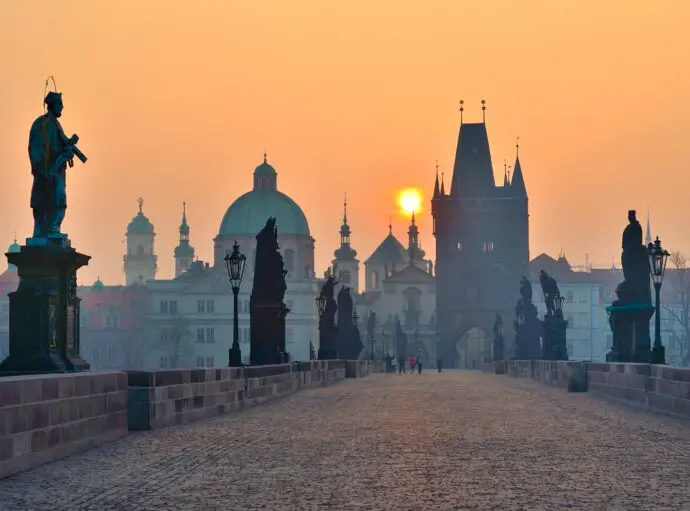
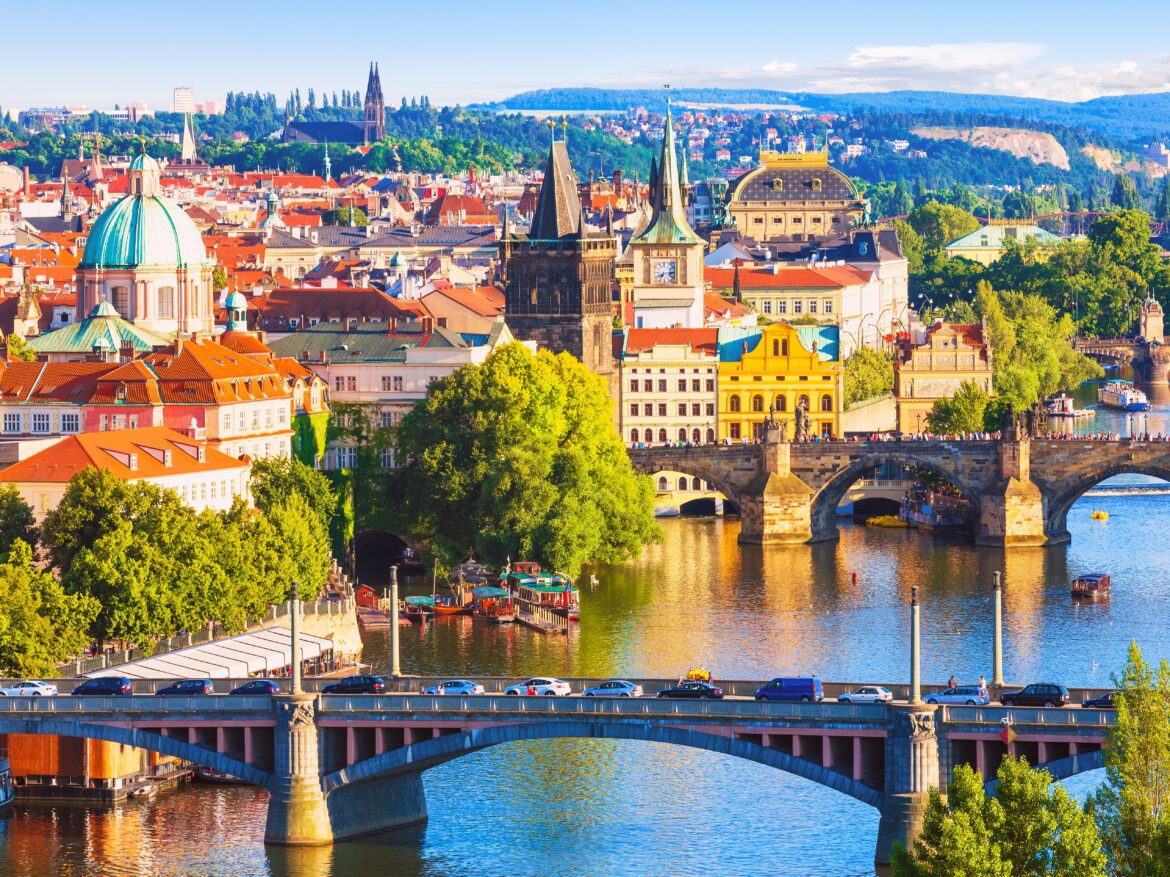
Prague is one of the most recognisable destinations in the region, known for its historic architecture and compact layout. The old town, punctuated by narrow streets and courtyards, connects directly to landmarks such as Charles Bridge and Prague Castle. Unlike larger capitals, Prague’s central districts can mostly be explored on foot, although public transport remains useful for outer neighbourhoods, with trams forming an important part of daily movement.
The city changes noticeably throughout the day, with quieter mornings and busier evenings around the historic centre. Prague also serves as a major railway hub, connecting routes from Poland, Germany, Austria, and Hungary, making it easy to continue travelling in multiple directions. The city’s scale allows visitors to combine sightseeing with slower exploration, as Prague often feels more concentrated than other capitals in the region.
Vienna and imperial influence
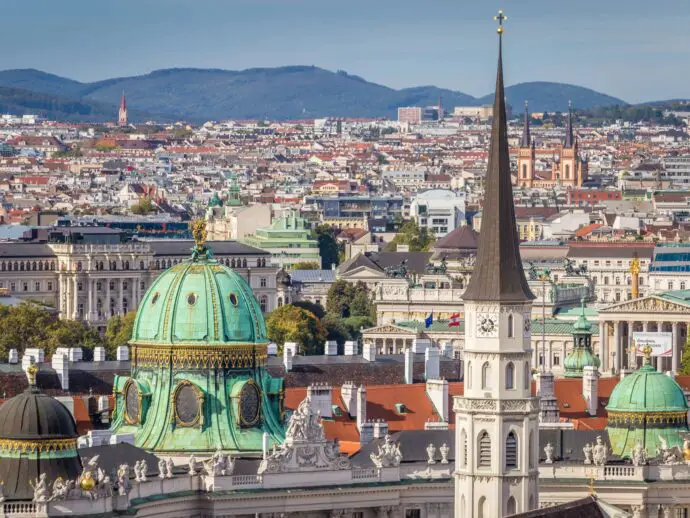
Vienna has a more formal atmosphere, with broad avenues, imperial architecture, and structured public spaces. The historic centre includes landmarks such as Schönbrunn Palace and St. Stephen’s Cathedral, reflecting the city’s role within the former Austro-Hungarian Empire. Public transport here is highly organised, making it easy to move between districts, which is always useful.
Vienna’s café culture also dictates the pace of the city, with longer meals and quieter afternoons compared to faster-moving capitals. Museums and concert venues also play a central role in daily life, particularly in the inner districts. The transition from Prague to Vienna highlights clear differences in urban design and atmosphere. Vienna feels larger, more ordered, and more monumental, while at the same time, the city remains accessible thanks to its efficient transport network. It forms a strong southern endpoint for a Central European rail itinerary.
Regional towns and slower routes
Beyond the major capitals, smaller towns throughout Central Europe provide a different perspective on rail travel. Places such as Olomouc or Brno are connected by regional trains that move at a slower pace than international routes. These journeys often pass through farmland, forests, and smaller communities rarely included in shorter itineraries.
Stations are usually simpler, with fewer passengers and less commercial activity. Travelling through these areas adds variation and reduces the constant movement associated with larger cities. Accommodation is often more affordable, and daily life feels less oriented around tourism. These stops also help break up longer journeys between capitals, and including smaller towns creates a more balanced route overall. It highlights the diversity that exists within relatively short geographic distances.
Bringing the journey together
Travelling through Central Europe by train combines efficient transport with constantly changing surroundings. Poland, the Czech Republic, and Austria each offer distinct urban styles, historical influences, and regional landscapes. Rail connections make it possible to move between them without complicated planning, while the gradual nature of train travel helps connect the experience into a single continuous journey.