Have you ever wondered why peace has become the most elusive and sought-after amenity in modern luxury travel experiences? Stepping off a long-haul flight often means entering a terminal humming with layered noise, from constant gate announcements to the percussion of rolling luggage. The nervous system braces for this sensory assault, making the absence of noise far more desirable than traditional offerings.
By treating genuine quiet as a foundational design element, hospitality operators are redefining what true indulgence means today. To achieve quiet luxury, premium destinations are elevating silence as a status symbol and prioritizing absolute privacy to restore traveler well-being.
This deliberate absence of ambient noise offers an immediate antidote to the sensory overload of global transit. The most discerning destinations are delivering this coveted silence through three distinct and highly intentional approaches.
1. Recognizing Silence as the New Status Symbol in Travel Spaces
Modern travel carries a unique type of overstimulation that exhausts the nervous system. Airports are engineered for throughput rather than regulation, while hotel lobbies have transformed into buzzing social hubs. While previous generations of travelers may have embraced this ambient energy, today’s discerning guests frequently find the constant auditory input draining.
The noise is more than just annoying, as it has tangible physical effects on the human body. Scientific research aligns with what frequent travelers already intuitively understand about loud environments. According to the National Institute on Deafness and Other Communication Disorders, at least 10 million adults in the U.S. have features of hearing loss from exposure to loud noise.
Environmental health studies consistently link chronic noise exposure in airports and hotel common areas to elevated cortisol levels and impaired sleep quality. Unsurprisingly, peace consistently ranks among the top attributes associated with a truly restorative trip. In response, the design world is embracing acoustic luxury by creating spaces engineered to feel quiet rather than just look beautiful.
Operators are actively evaluating various soundproof solutions, ranging from heavy acoustic drapery and spatial redesigns to PrivacyPod’s office phone booths. Transitioning from an echoing hotel corridor into a properly sound-isolated room provides an immediate physical shift. Shoulders drop, breathing slows, and the atmosphere fundamentally changes to signal genuine relief.
Key Insight: Modern luxury is defined by the rare ability to find silence. Protecting the nervous system from travel-induced overstimulation has become a higher status symbol than traditional, theatrical displays of opulence.
2. Weaving Acoustic Pods Into the Fabric of Luxury Destinations
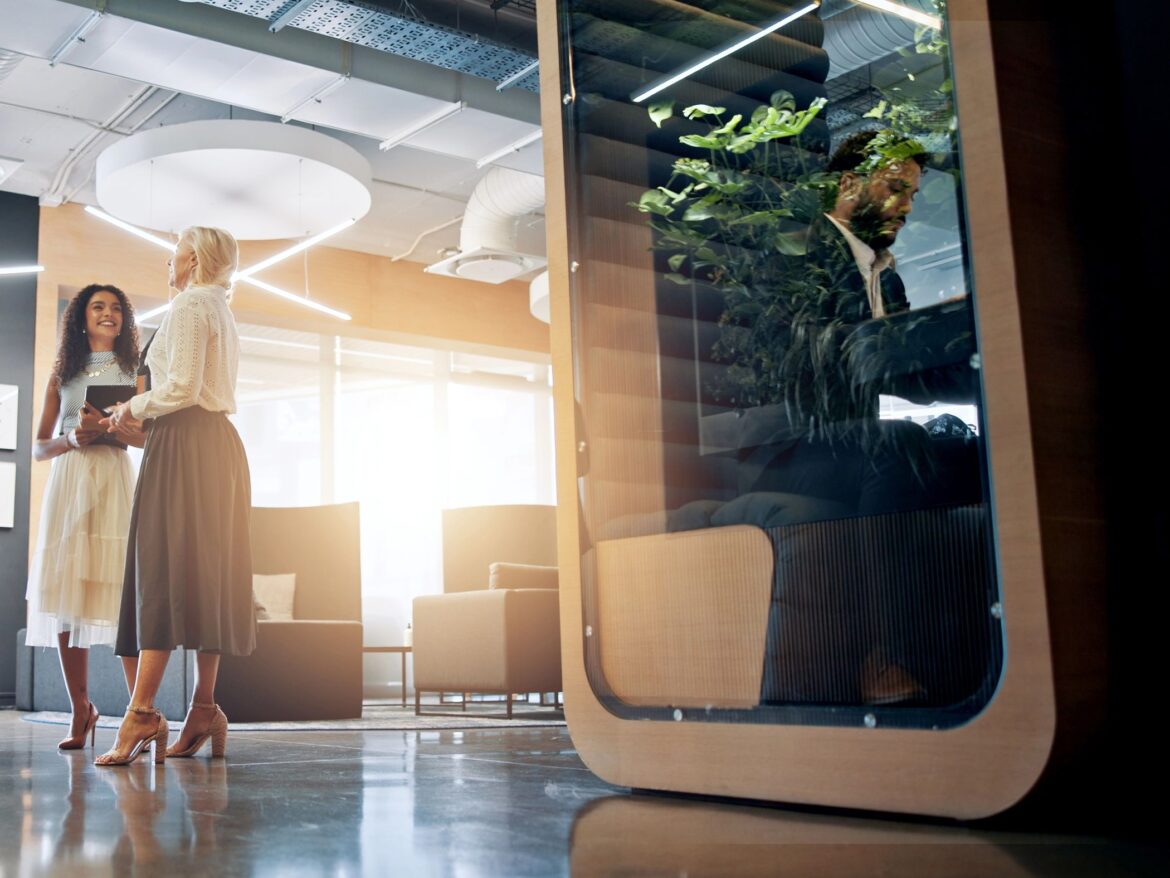
Integrating intentional silence into bustling environments requires specialized design interventions. First-class lounges and high-end lobbies are increasingly installing sleek, softly upholstered acoustic enclosures designed to blend seamlessly with surrounding luxury aesthetics. Settling inside one of these specialized quiet spaces allows the traveler to genuinely disconnect while the busy lounge continues operating just outside the glass. These installations address a fundamental need for cognitive rest.
This acoustic integration is reshaping hospitality architecture across several key environments where recovery is prioritized. In airport and airline lounges, business travelers require spaces to conduct sensitive client calls, review presentations, or sit in absolute stillness. Thoughtfully placed acoustic enclosures accommodate these needs while signalling that the operator understands the demands of modern business travel.
Boutique hotels and resort lobbies present an opportunity for a sensory reset before guests even reach their rooms. As threshold spaces between transit and rest, lobbies equipped with soundproofed alcoves offer an immediate transition that soft furnishings alone cannot achieve. Similarly, spa and wellness facilities are adopting acoustic isolation as a pre-treatment ritual. This allows guests to decompress and reset their baseline before beginning restorative therapies.
Making these environments achievable often involves utilizing modular solutions designed for flexible deployment. These studio-grade acoustic sanctuaries provide dedicated quiet without requiring permanent construction, structural permits, or complex facility modifications. They feature customizable exterior finishes and interior fabric configurations, allowing them to disappear into luxury interiors. Stepping inside these modular environments provides an immediate experiential shift, softening the ambient texture of voices and luggage carts into a gentle hum.
Pro Tip: Use modular acoustic pods to create instant quiet zones without permanent construction. These studio-grade sanctuaries allow travelers to conduct confidential work or find stillness while maintaining the aesthetic flow of high-end lobbies.
3. The Quiet Privilege and How Privacy Transforms the Luxury Travel Experience
A specific tier of calm becomes available only when a traveler knows with absolute certainty that external disruptions cannot reach them. This goes beyond the mere absence of noise because it represents total environmental sovereignty for the individual. For high-end travelers, this genuine acoustic privacy delivers multiple compounding benefits that redefine their journey. It acts as a protective barrier against the exhaustion typically associated with modern transit.
Emotional restoration is the most immediate physiological reward when travelers enter these isolated spaces. Environmental psychology studies indicate that uncontrolled ambient noise keeps the brain in a state of low-level vigilance. Removing that constant sensory stimulus actively lowers stress markers and accelerates the cognitive recovery required after long-haul transit. In fact, a CDC assessment estimated that a 5-dB noise reduction scenario would decrease the occurrence of hypertension by 1.4%, which just goes to show that peace and stillness is super important.
Functional freedom is equally critical for professionals who must remain connected while on the move. A privacy booth in a travel hub functions as an essential tool for executing confidential negotiations or completing deep work. For executives crossing multiple time zones, the capacity to operate at peak focus regardless of the surrounding environment is a fundamental requirement. These acoustic solutions prevent open environments from naturally disrupting vital productivity.
Social sovereignty represents the most resonant shift in modern luxury travel today. High-end travel continues moving away from performative display toward protected, highly personal experiences. The ability to dictate exactly when to engage with the world and when to withdraw is the defining expression of this shift.
Ultimately, when a destination invests in acoustic privacy, it moves beyond basic comfort and demonstrates genuine care for its guests.
The Real Impact
Silence as a status symbol, acoustic design as a hospitality tool, and privacy as a durable privilege all converge around a single concept of intention. The spaces defining luxury travel over the next decade will treat quiet not as an accidental byproduct, but as a deliberate design commitment worth engineering and protecting.
As wellness travel expands, destinations offering genuine acoustic sanctuaries will consistently stand apart from the competition. Discerning travelers are already noticing these intentional shifts across the globe. They appreciate the softly lit enclosure tucked beside the lounge windows, the hotel lobby offering actual stillness, and the spa prioritizing mental arrival. These spaces are leading the conversation in modern hospitality by prioritizing cognitive and emotional well-being above traditional opulence. Engineering spaces that actively block out the noise of the world provides visitors with exactly what they are searching for.
Warning/Important: Don’t treat silence as an accidental byproduct of design. In an increasingly noisy world, failing to intentionally engineer quiet spaces will lead to guest sensory overload and decreased brand loyalty in the luxury tier.
The Bottom Line
For hospitality operators and facilities managers, the integration of these acoustic solutions addresses a critical guest need. Genuine quiet is never just an absence of sound because, in the right environment, it is the most generous and restorative amenity a destination can provide.
By investing in dedicated quiet spaces and soundproof solutions, properties ensure their guests leave feeling completely restored and deeply valued. Highlighting soundproof solutions in creating relaxing travel experiences is no longer optional for premium brands.