At 4:59 a.m. on July 15, seven teams of men leave Kushida Shrine carrying one-ton floats through the streets of Hakata. The race is over by 6 a.m. The 780 years that preceded it take considerably longer to explain.
The crowd begins gathering on the Oiyama race route well before 3 a.m, with lanterns flickering along the narrow streets of the Hakata district. The summer air in Fukuoka in mid-July is already warm, already thick, and the people lining the kerbs have brought water of their own to throw. Every international visitor among them has already completed their QR Code to Enter Japan, the digital customs declaration required of all arriving passengers, which is checked at immigration in every Japanese airport. That administrative step sorted, what they are waiting for, in the dark before dawn on July 15, is one of the oldest unbroken festival traditions anywhere in the world.
Hakata Gion Yamakasa has been held every year since 1241, a continuity of 780-plus years that survived war, plague, fire, and modernization without interruption. According to the Visit Fukuoka official festival guide, it is a Shinto ritual of Kushida Shrine, designated as a nationally important intangible folk cultural property of Japan and registered as a UNESCO Intangible Cultural Heritage in 2016. Japan welcomed a record 42.7 million international visitors in 2025, and cultural festivals are among the primary draws for international travelers who arrive already knowing what they want to see.
A Plague, a Monk, and 780 Years of Continuity
The festival dates back to 1241 and a specific crisis when a plague was moving through Hakata’s trading port. A Buddhist priest named Shoichi Kokushi was carried through the streets on a platform, praying and sprinkling holy water. The city credited him with stopping the epidemic and repeated the ritual every year for eight centuries. The platform became a float; the float became an elaborate structure of bamboo, cloth, and lacquered wood.
The act of moving through the streets of Hakata as communal purification has remained, and today the festival is organized around the Kushida Shrine and seven historic districts called nagare. Each maintains its own float, its own runners, and its own fierce pride in the outcome of the race. Companies in Fukuoka grant employees the day off. Children run alongside the floats for years, preparing for the decades until they can carry them.
Two Weeks, Fourteen Floats, One City
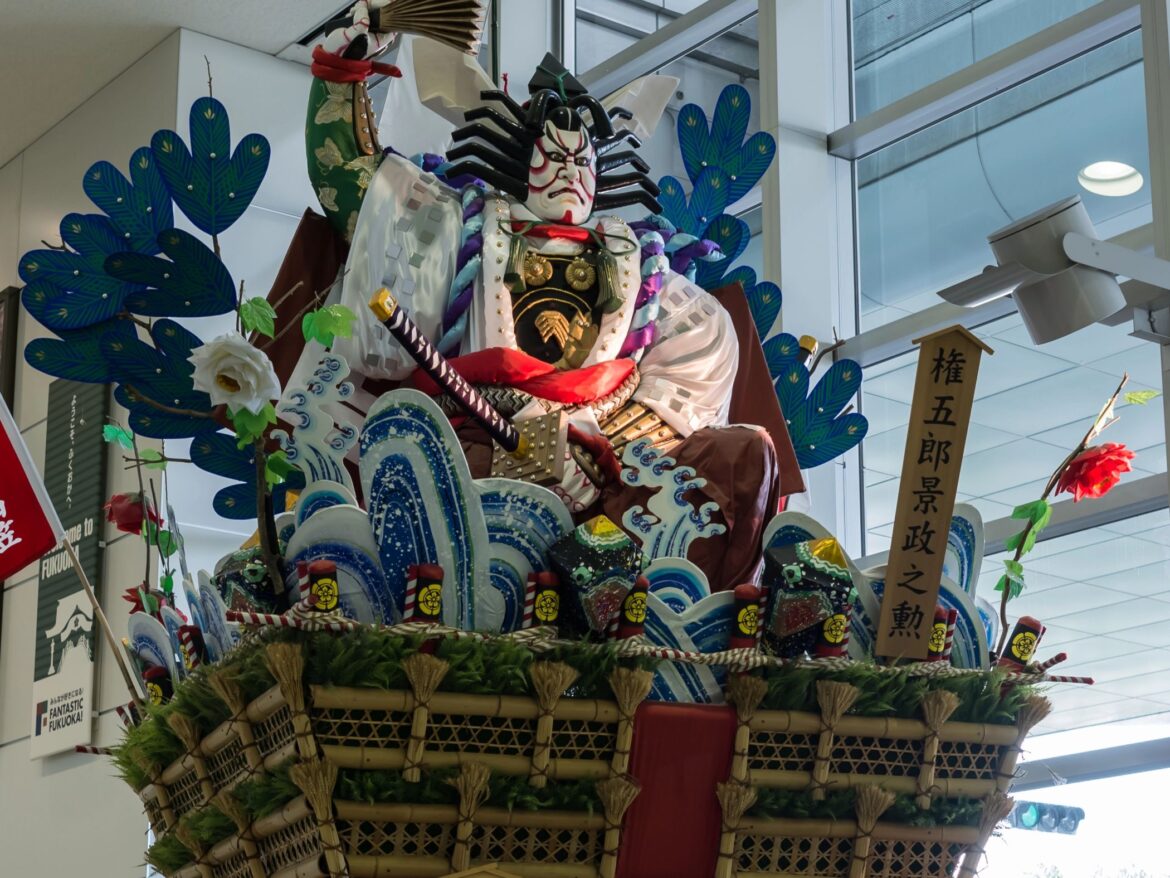
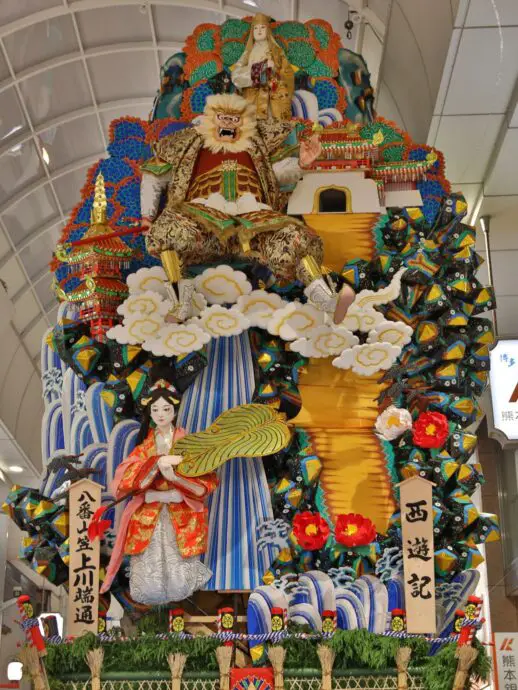
The festival runs July 1 through July 15. On July 1, fourteen kazari-yamakasa decorative floats reaching 10 to 15 meters high are installed at locations across Fukuoka. Each is built by its nagare and decorated by master doll makers: battle scenes on the front, popular culture, including anime characters on the back. They are rebuilt from scratch every year, which is why the quality is so good.
“The passion of Hakata residents for Hakata Gion Yamakasa is so tremendous that some companies even let participants have the day off for the festival.” — MATCHA Japan Travel Guide
On July 12, the Oiyama Narashi (the practice race) runs 4 kilometers from Kushida Shrine at 3:59 p.m. Then on July 13, the Shudan Yamamise brings all seven racing floats to Meiji-dori outside Fukuoka City Hall from 3:30 p.m. This is the only moment in the festival when every float assembles in one place, in daylight, before the crowd.
4:59 a.m.: The Oiyama Race
The main race begins at exactly 4:59 a.m. Each team performs the Kushida-iri, a sprint through the Kushida Shrine grounds, before emerging onto the 5-kilometer course with teams leaving in five-minute intervals. The kaki-yamakasa float weighs approximately one ton and is carried entirely by human effort, without wheels or mechanical assistance. Around 30 runners carry at any given moment, rotating constantly, directed from above by two men who ride the float and signal swaps. According to Japan travel trend data, cultural festival tours in Japan saw an 18 percent year-on-year increase in international bookings in 2025, and Yamakasa sits at the center of Fukuoka’s share of that demand.
The chant is “Oisa! Oisa!” rising with the effort of the runners. Spectators throw water on the men to cool them; the participants throw water back. The race ends at Suzaki-machi, where the floats arrive in sequence with the crowd pressed around them. From first float to last, the whole race takes under two hours. By 6 a.m., it is over, and the streets of Hakata go quiet.
Fukuoka Beyond the Festival
Fukuoka is Japan’s sixth-largest city and the main gateway to Kyushu. Its food culture centres on Hakata tonkotsu ramen, a rich pork-bone broth with thin, firm noodles that originated here and is best understood here. The yatai, Fukuoka’s outdoor food stalls, line the riverbanks of Nakasu and the streets near Tenjin each evening, serving grilled skewers, soups, and cold beers under lanterns among the most concentrated expressions of casual public dining in Japan.
Kushida Shrine is open year-round and maintains a permanent display of one Kazari-yamakasa in its grounds. The Hakata Traditional Craft and Design Museum, near Hakata Station, shows the skills behind float construction: Hakata dolls, Hakata ori silk weaving, and the bamboo and lacquerwork techniques behind the yamakasa, the best preparation for understanding what you will see on the race course.
Before You Go
All international arrivals to Japan must complete a digital customs declaration before landing, that is checked at immigration in every airport. Complete the form before departure. Fukuoka is served by Fukuoka Airport, one of the most centrally located airports in Japan: the international terminal connects to Hakata Station by subway in approximately five minutes.
In 1241, a city facing plague watched a priest move through its streets and decided to make it a ritual. Seven hundred and eighty years later, seven teams of men leave a shrine at 4:59 in the morning and run five kilometers through those same streets at speed, with a ton of decorated wood on their shoulders, while the city presses in around them and throws water. The form has changed but the impulse has not.