You smell Fogo before you fully understand it, the powerful mineral scent that emanates from the black lava rocks swirling all around you. Cape Verde sits around 570 kilometres off the coast of Senegal, the islands having formed from volcanic activity far out here in the ocean. First came the lava, then the people, who decided to stay and forge a life in this remote archipelago.
If you’re thinking of visiting Cape Verde to see what lava island life is like, it’s important to sort your US-to-Cape Verde Entry Requirements well ahead of flying. Admin is not what you want rattling around your head when you first see this place, you want to get straight out there and explore.
Fogo: Living in the Shadow of Fire
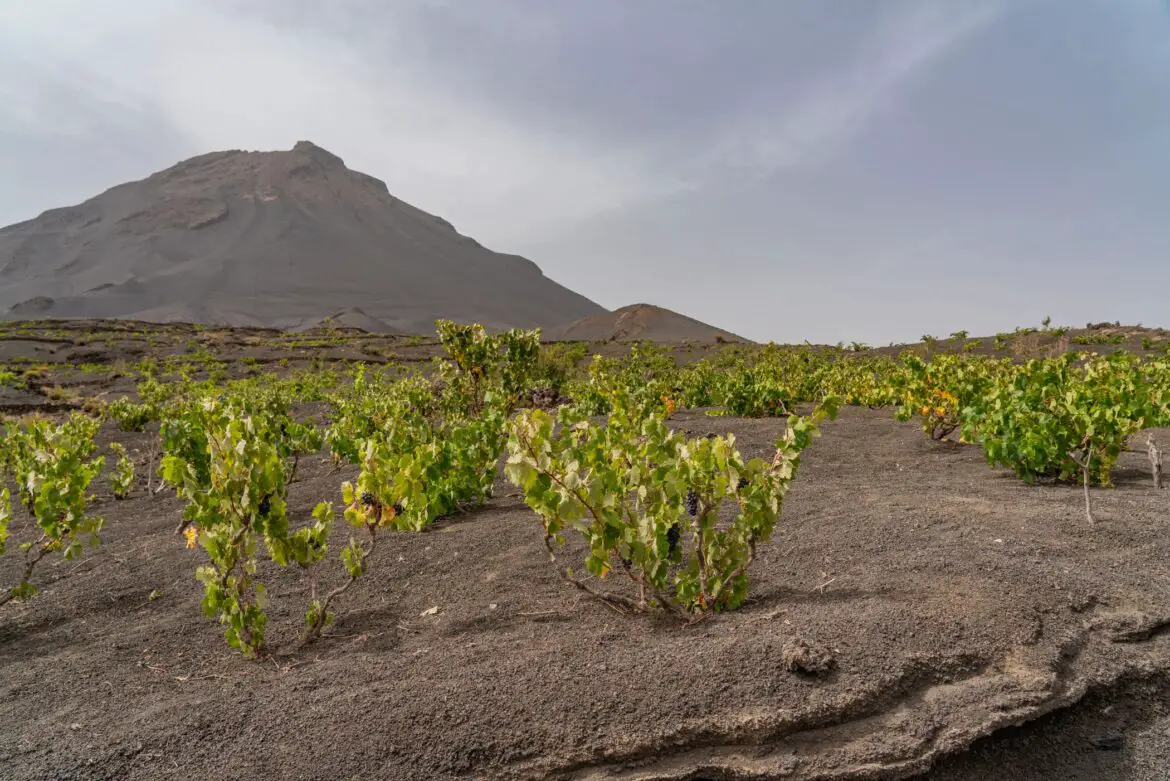
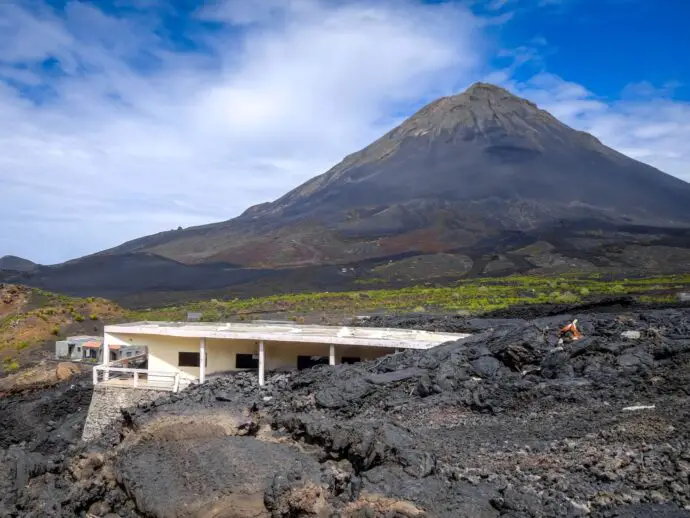
Pico do Fogo is 2,829 metres high volcano that erupted quite recently back in 2014. Inside Chã das Caldeiras, the lava took its own path, covering the entire settlement of Portela. Today, you can stand at the edge of those flows and look back at what survived. The gap where houses used to connect to other houses is just rock. Then you turn around, and there’s a woman hanging washing out. It’s a surreal experience, and similar to what you’ll find in other volcanic regions that have been destroyed by lava.
A Community That Refused to Leave
People returned and rebuilt their lives on the same ground, sometimes next door to where the lava stopped. Ask why, and the answer keeps coming back to soil. The volcanic earth has made the soil very fertile, which is great for growing crops. Coffee, grapes and vegetables all thrive inside this caldera that a decade ago was actively on fire. Fogo wine in particular has quietly developed a reputation well beyond the island itself.
There’s no performance of bravery here, and nobody is making a point. Families are just farming the land their grandparents farmed, and their calculation about what this place is worth hasn’t changed because of one bad eruption.
How to Experience It
If you’re thinking of visiting Cape Verde to see what lava island life is like and want to experience Fogo for yourself, the best thing to do is to walk up to the summit. It’s a 6-8 hour return hike from the caldera floor, with a local guide who almost certainly has a personal story to share about the events of 2014. These tales bring the whole experience to life, and it’s a privilege to explore with someone who knows the place like the back of their hand.
You can even spend the night inside the caldera, in one of the local guesthouses catering for tourists. Stays here are about the location and experience rather than thread counts and butler service, but surrounded by these incredible landscapes and warm hospitality, that won’t matter. Dinner is an experience in itself too, with traditional cachupa, a slow-cooked corn and beans stew with whatever protein the kitchen has going. Eaten here, at this altitude, next to these lava fields, it genuinely tastes different from anywhere else you’ll have it.
Beyond Fogo: How Volcanic Origins Shape the Whole Archipelago
Santo Antão in the north has ridges that fall away into gorges so steep they make you question your sense of distance. You’ll gaze upon ancient eruption fields, now covered by terraced coffee and banana farms, and spy walking trails that snake off towards the endless horizons.
Santiago holds Cidade Velha, a UNESCO-listed town founded in 1462, and the first European colonial settlement in the tropics. Built against a volcanic backdrop, this is a special place to visit. History and geography are ever present, and wandering the streets gives a real sense of the island’s identity.
Fire as Foundation
Everything in Cape Verde is linked to its volcanic past, whether it’s the dramatic terrain, the food on your dinner plate, or the wine in your glass. Hiking paths focus on the caldera, and the family feeding you dinner rebuilt their kitchen after the last eruption. At some point, that accumulation stops being merely interesting and starts being genuinely moving. It’s a feeling that will stay with you forever.